
- Restaurants
- May 20, 2026
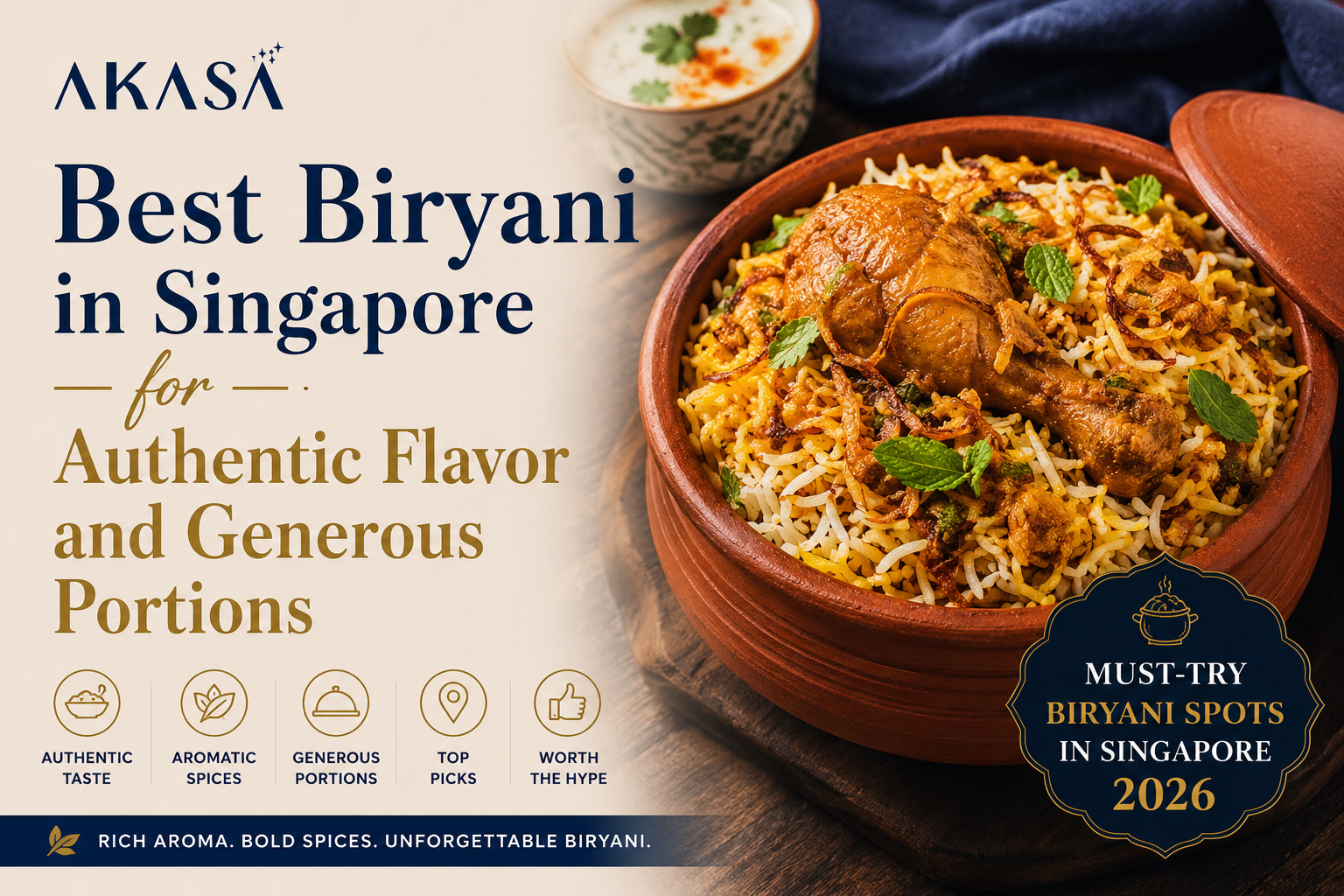
If you’ve lived in Singapore long enough, you already know someone who will argue about biryani like it’s personal. Because for a lot of people here, it is. The rice has to be right. The meat has to have actually spent time with the marinade not just been tossed in and thrown on heat. And the aroma should do something to you before you even sit down.
People plan their day around a good biryani plate here. They’ll leave their office in Tanjong Pagar, take the MRT to Little India, queue in heat that genuinely tests your commitment, eat, and go back. No complaints. That’s how much it matters.
So when it comes to finding the best biryani in Singapore, the challenge isn’t really finding biryani — it’s knowing which kind you want, and which places are actually doing it right versus just doing it.
Pakistani-style from Geylang, Hyderabadi dum from a sealed handi, South Indian Muslim hawker plates at Tekka, Ambur-style with seeraga samba rice — these aren’t variations of the same dish. They’re different dishes with different techniques and completely different flavors. If you’re treating them as interchangeable, you’re going to miss what makes each one worth eating.
What Makes a Great Biryani in Singapore?
A lot of restaurants here serve biryani. That’s a fact. A much smaller number serve biryani you’d go back for. Knowing the difference before you order saves you from a disappointing plate.
The Importance of Rice Texture and Aroma
Start with the rice, because that’s where it either works or it doesn’t. Good biryani rice is long-grain basmati, cooked to the point where each grain is separate, slightly firm, and carrying the flavor of everything it cooked near. You should be able to smell it from across the table — that saffron, those fried onions, the whole spices that have been doing their job slowly.
Mushy rice is the most common failure. Once that texture goes, the whole plate falls apart regardless of how good the masala is. And there’s a moisture issue too — the rice needs to be moist enough that it doesn’t feel dry, but not so wet that grains are sticking together.
The fragrance in properly made biryani builds from layers: birista (fried onions), cardamom, star anise, saffron, and the fat from the meat absorbing into the rice as it cooks. That’s not something you can rush or fake.
Meat Quality and Marination Matter More Than Most People Think
The meat in a well-made biryani has the same depth of flavor as the rice. Not similar depth — the same. That only happens when the marination is given real time and the cooking is slow enough that spices actually penetrate the meat rather than just sitting on the outside.
Plenty of restaurants in Singapore use decent ingredients and still manage to produce something flat because they rush. Mutton that’s marinated for 8 to 12 hours and cooked slowly is a fundamentally different thing from mutton that was marinated for an hour and thrown in. People who eat biryani regularly can tell. Sometimes they can tell on the first bite.
Regional Biryani Styles Found in Singapore
This is where Singapore’s food scene genuinely stands out. Within a few kilometers, you can eat biryani from completely different regional traditions that have almost nothing in common except the name.
Hyderabadi biryani is the dum style — meat and rice cooked together in a sealed pot over low heat. Rich, aromatic, and built around saffron layering and deeply marinated meat. Usually on the spicier side.
Pakistani biryani hits differently from the moment you look at it. The masala gives the rice a deep orange-red color, and the spice profile leans harder on cloves, mace, and black pepper. Very popular around Geylang.
Ambur biryani comes out of Tamil Nadu and uses seeraga samba rice — smaller grain, denser, cooked with raw tomato. If you’re used to basmati-based biryanis, this will genuinely surprise you.
Lucknowi (Awadhi) biryani is the subtle one. The meat is dum-cooked separately before being layered with the rice. Lighter and more fragrant, without the aggressive heat of Hyderabadi or Pakistani versions.
South Indian Muslim-style biryani shows up most around Tekka Market and Little India. Bone-in chicken, a regional spice blend, usually with a thin raita on the side. Straightforward and satisfying in a way that more elaborate preparations sometimes aren’t.
Best Biryani Restaurants in Singapore Overall
The best biryani in Singapore isn’t concentrated in one place or one type of restaurant. It spans hawker stalls that have been at the same spot for decades, full-service restaurants that have been refining their recipes since before Singapore was independent, and a few newer spots that have quietly gotten very good.
Most Popular Biryani Spots Locals Recommend
Akasa — Sits near Tanjong Pagar in the CBD. North Indian dum biryani in a proper dining setting, without the trip to Little India. The rice texture is good, the masala is balanced, and it works well as a business lunch or a dinner that doesn’t feel like a compromise.
Bismillah Biryani (Dunlop Street, Little India) — If you ask around about where to eat biryani in Singapore and get a consistent answer, it’s usually this one. The mutton dum biryani here is slow-cooked and actually tastes like it. Queue for lunch is part of the deal.
Zam Zam Restaurant (North Bridge Road) — They’ve been open since 1908. The chicken biryani has fed multiple generations of the same families, and that’s not an accident. Portions are generous, pricing is fair.
Islamic Restaurant (North Bridge Road) — Opened in 1921. At some point, longevity stops being a coincidence and starts being a statement about consistency. The mutton briyani here is slow-cooked, and the gravy is particularly good.
Allauddin’s Briyani (Tekka Market) — Made fresh in the morning, gone when it’s gone. Get the mutton.
Lagnaa Barefoot Dining (Upper Dickson Road) — South Indian-focused, lets you pick your spice level. Good when you want a proper sit-down meal and some control over how much heat you’re dealing with.
For a broader view of Indian dining across the island, this guide to the best Indian restaurants in Singapore covers far more ground beyond biryani alone.
Restaurants With Consistently Long Queues
At Bismillah and Allauddin’s, the queue situation is real. Both build up before noon on weekdays. The practical solution is to show up before 11:30am or wait until after 2pm. The food is worth it; standing in Singapore midday sun for 40 minutes is a harder sell.
Zam Zam gets heavy on weekends and especially during Ramadan. If you have flexibility, weekday mornings are the better window.
Hidden Gems That Deserve More Attention
The Banana Leaf Apolo (Race Course Road) — Most people come for the fish head curry and walk past the biryani. Don’t do that.
Muthu’s Curry (Race Course Road) — Same issue. The biryani is not the famous item here, which means most people skip it. Order it anyway.
Victory Restaurant (Campbell Lane) — Consistently good, consistently underrated, consistently affordable. One of the more honest budget options in Little India.
Places Known for Authentic Dum Biryani
Akasa — The North Indian dum biryani here uses slow-cooking methods that give the rice actual depth. It pairs well with their kebabs, and the full meal is stronger for it.
Bismillah Biryani — The dum technique shows in every plate here. The rice carries the meat flavor because they cooked together, and the result is noticeably different from places that treat the rice and meat as separate problems.
Hyderabad Kitchen — The most Hyderabadi-focused restaurant in Singapore. The handi arrives sealed at the table and the smell when it opens is one of the better moments this city’s food scene has to offer.
Best Halal Biryani in Singapore
The good news for Muslim diners is that the majority of well-known biryani spots in Singapore are halal-certified. Finding the best biryani in Singapore within halal guidelines here is easier than in most cities.
Muslim-Friendly Biryani Restaurants Worth Visiting
Zam Zam, Islamic Restaurant, Allauddin’s, and Bismillah all operate under halal guidelines. Most hawker stall biryani vendors across Little India and Tekka Market do too.
For a wider halal Indian sit-down menu, Adam’s Restaurant and Gaylord Restaurant are worth adding to the list.
Best Halal Dum Biryani Near Popular Areas
Around Little India, Bismillah and the Tekka Market hawkers are the obvious anchors — the highest concentration of quality halal dum biryani on the island in one area.
The Bugis and Kampong Glam corridor brings a different flavor profile. Arab Street and Bussorah Street lean Pakistani-style — bold, heavily spiced, that deep masala color. A completely different experience from the Little India spots, and not a lesser one.
Kampong Glam doesn’t get enough credit for biryani. A few spots on Kandahar Street serve generous plates at fair prices with a spice balance that works.
Family-Friendly Halal Dining Spots
Families tend to gravitate toward Zam Zam, Islamic Restaurant, and Lagnaa for good reason. Proper seating, air-conditioning, reliable food across multiple visits, and menus wide enough that not everyone has to get the same thing.
Affordable Halal Biryani Places With Large Portions
Hawker biryani in Singapore is exceptional value. Allauddin’s at Tekka Market does a generous mutton plate for under SGD 8 and keeps the quality consistent. There aren’t many places on the island where that combination holds up as reliably.
For a more complete picture of the Little India area, the Little India Singapore restaurants guide is worth reading before you go.
Best Hyderabadi Biryani in Singapore
Hyderabadi biryani has a dedicated following here, and it’s earned. The dum technique is technically demanding. The places that respect the method are consistently better than the ones that approximate it.
Authentic Dum Cooking Restaurants
The dum method — marinated meat, par-cooked rice, sealed pot, slow heat — produces a dish where rice and meat feel like one thing, not two things on the same plate. That integration is the whole point, and it doesn’t happen any other way.
Hyderabad Kitchen takes this seriously. The sealed handi presentation is not theater. The aroma that comes out when it’s opened tells you something real happened in that pot.
Spicy Hyderabadi Biryani Spots
Hyderabadi biryani carries real heat. The chili builds through the meal from the layering, and the whole spices add to it gradually. If you want the best biryani in Singapore with genuine spice rather than token warmth, Hyderabadi is the right direction.
Hyderabad Kitchen and several Tekka Market stalls don’t soften the heat for the sake of broader appeal.
Best Mutton Hyderabadi Biryani
Mutton is traditional in Hyderabadi biryani, and the reason is practical — bone-in mutton renders fat into the rice during cooking, and the bone itself adds richness that boneless protein can’t produce. Slow-cooked mutton done this way is a different experience from the chicken version.
Bismillah’s mutton dum biryani is the benchmark most people in Singapore reference. Hyderabad Kitchen’s version is equally strong on marination depth.
Restaurants Using Traditional Recipes
For traditional preparation, the older spots are the safest bet. Zam Zam, Islamic Restaurant, and Bismillah have been cooking from consistent recipes for decades. In Singapore’s competitive food environment, that kind of staying power is a quality signal on its own.
Best Pakistani and Indian Muslim Biryani in Singapore
Most guides lump these together. They shouldn’t. Pakistani biryani and South Indian Muslim biryani are not the same dish and don’t taste remotely alike. Understanding that distinction before you search for the best biryani in Singapore means you’re more likely to actually get what you’re after.
Rich and Heavily Spiced Pakistani Biryani
Pakistani biryani goes heavier on cloves, black pepper, and mace. The rice takes on deep color from the masala. The gravy is thick and the spice is more aggressive than most Indian versions.
Karachi Biryani in Geylang is the go-to for this style. If your biryani reference points are mostly Indian, the Pakistani version will read noticeably richer.
Several restaurants on Geylang Road between Lorong 7 and Lorong 25 serve strong Pakistani-style biryani into the late evening.
Traditional Indian Muslim Biryani Places
The Indian Muslim biryani tradition in Singapore runs through Tamil Nadu and Kerala recipes — more aromatic, more subtle than Pakistani, and different again from North Indian dum style.
The Tekka Market hawkers are the clearest expression of this — made fresh, served simply with raita, gone once they’re gone.
Restaurants Popular Among Local Indian Communities
The most honest quality check for any biryani spot here is whether local Indian families eat there on a regular basis. Not food bloggers. Not people making a one-time visit based on a recommendation. Families who’ve been eating biryani their whole lives and know exactly when something is off.
Bismillah, Islamic Restaurant, and Allauddin’s pass that test consistently.
Places Known for Homemade Flavor Profiles
Hawker biryani at its best has a spice balance that feels calibrated by someone’s instinct rather than a commercial recipe — not too sharp, not too oily, not perfectly uniform every single time. Some stalls in Little India still cook this way, though it’s harder to find than it used to be.
Affordable Biryani Places in Singapore That Still Taste Amazing
Some of the best biryani in Singapore costs less than a hotel lobby coffee. The price doesn’t track with quality the way it does in a lot of cities.
Budget-Friendly Biryani Under SGD 10
Allauddin’s Briyani (Tekka Market) — SGD 5 to 8 for a proper mutton or chicken plate with raita. Nothing on the island beats this value.
Victory Restaurant (Campbell Lane) — Good food at a fair price. Flies under the radar, which works in your favor.
Tekka Market hawker stalls — Several serve solid biryani under SGD 7. Go before noon.
Hawker-Style Biryani Stalls Worth Trying
The hawker culture around biryani in Singapore is one of the few places in the world where authentic biryani in Singapore at SGD 6 or 7 — with raita, with a small curry on the side — is a real thing. That doesn’t exist in most cities at any price.
Timing is everything. Stalls sell out before 1pm. Early arrivals get the full selection. Late arrivals get whatever’s left.
Value-for-Money Family Portions
For family-sized portions at prices that make sense, the hawker areas around Tekka Market and Geylang are the right places to look. Established stalls regularly do portions for SGD 15 to 20 that actually feed a family.
Cheap Biryani Spots Near MRT Stations
- Little India MRT — Tekka Market is five minutes on foot. The whole Serangoon Road area from there is dense with options.
- Bugis MRT — Short walk to Arab Street, and Zam Zam on North Bridge Road.
- Tanjong Pagar MRT — Akasa is a solid option for Indian biryani in Singapore without crossing town. Fair price for the CBD.
Best Biryani for Delivery and Takeaway in Singapore
Ordering the best biryani in Singapore for delivery requires a different set of considerations. Biryani doesn’t always travel well. The rice can go soggy. The meat can dry out. And how the restaurant packs it matters more than most people realize until they open a disappointing container.
Restaurants That Pack Biryani Properly
The move that separates good delivery biryani from bad delivery biryani is simple: gravy packed separately from the rice. If a restaurant does this, the rice texture survives the journey. If they don’t, you’re opening a clump.
Akasa handles this correctly — the biryani arrives with gravy on the side, and the rice holds up during transit. For a CBD restaurant doing delivery, that’s not a given.
For a fuller look at Indian food delivery across Singapore, the best Indian food delivery in Singapore covers the main options.
Best Late-Night Biryani Delivery
Honest answer: late-night biryani delivery in Singapore is limited. Most of the good spots close by 9 or 10pm.
After midnight, GrabFood and Foodpanda have some Indian restaurant partners running in Geylang and around Orchard Road. Quality is inconsistent but it’s what exists at 1am.
Family Meal Deals and Sharing Portions
Akasa has sharing portions on their delivery menu that work well for four to six people — useful for a home dinner or an office order where you want something worth eating rather than just something convenient.
Which Biryani Holds Up Best During Delivery?
Dum biryani is the best choice for delivery. The cooking method produces a denser, more integrated dish that holds its texture during transit.
Pakistani biryani also travels well — the thick masala keeps moisture in during the journey.
Lucknowi biryani is the worst choice for delivery. The subtlety that makes it special — delicate aromatics, light texture — flattens out in a sealed container over 30 minutes. You don’t get the same dish.
Reheating tip: A tablespoon of water over the rice, covered, 60 to 90 seconds in the microwave. Most of the original texture comes back.
Best Biryani by Neighborhood in Singapore
The best biryani in Singapore isn’t spread evenly across the island. It concentrates in specific neighborhoods, and knowing which area suits which style saves you wasted trips.
Little India is the center of it. Nowhere else in Singapore has the same density of good biryani across different styles and price points in one walkable area.
Bismillah on Dunlop Street and Allauddin’s at Tekka Market are the anchors. Around them, smaller stalls and restaurants fill in different regional angles — different spice profiles, different price points, different styles. The Race Course Road and Upper Dickson Road corridor adds Lagnaa, The Banana Leaf Apolo, and Muthu’s Curry. Come before noon on weekdays.
Top Biryani Spots Around Bugis
Bugis connects to Arab Street, Kampong Glam, and the North Indian restaurant stretch near Serangoon Road. The biryani here generally leans halal and Muslim-influenced.
Zam Zam on North Bridge Road is ten minutes from Bugis MRT and remains one of the most iconic biryani spots in Singapore. Over a century of consistent operation is hard to argue with.
Hidden Gems in East Singapore
Bedok, Tampines, the Changi Road corridor — quieter biryani scene, but solid. Several Indian Muslim stalls serve good food to a loyal local crowd without much publicity.
Almost entirely local clientele. That’s always the right signal.
CBD and Central Singapore Biryani Restaurants
The CBD has fewer options than Little India, but “fewer” doesn’t mean none. Workers around Tanjong Pagar and Raffles Place have something worth eating.
Akasa is the strongest option for North Indian biryani in this part of the city. Near Tanjong Pagar MRT, proper dum biryani in a comfortable setting that works for a business lunch, a client dinner, or just a meal between meetings. Full menu and details at akasa.sg.
For planning corporate meals in this area, the best Indian lunch for corporate meetings in CBD guide is worth bookmarking.
Late-Night Biryani Spots Near Geylang
Geylang is where you go for late-night Indian Muslim food and Pakistani biryani in Singapore. Multiple restaurants along Geylang Road stay open until midnight or past it, and the food quality holds through the evening at the better spots.
Geylang Serai Market runs into the evening. For Pakistani biryani specifically, Lorong 7 to Lorong 25 has several places worth knowing.
Chicken vs Mutton Biryani — Which Restaurants Do It Better?
This is the debate that never fully settles in Singapore’s biryani scene. Both sides have real arguments. When you’re looking for the best biryani in Singapore, your protein preference often ends up being the deciding factor in which places are actually worth your time.
Chicken biryani gets dismissed sometimes as the less serious option, but that’s a mistake. When the marination is proper and the cooking time is right — the chicken still juicy, the spices worked all the way through — it’s its own thing entirely and holds up against anything.
Zam Zam’s chicken biryani has been one of the standards for a long time. Islamic Restaurant’s has been consistent for decades. For Hyderabadi-style specifically, the chicken dum biryani at Hyderabad Kitchen is the one to try.
Best Mutton Biryani for Rich Flavor
Mutton is the default preference for a reason. The fat renders into the rice during a slow cook. The bone adds depth to the cooking liquid that goes back into everything. Properly marinated mutton has a richness chicken can’t replicate, and most experienced biryani eaters would tell you that without hesitation.
Bismillah Biryani’s mutton dum version is the benchmark most people in Singapore cite. Allauddin’s mutton biryani is just as consistent and, at the price it sells for, probably the best value on the island.
Which Restaurants Serve More Tender Meat?
Tenderness is about marination time and heat. The slow-cooking specialists — Bismillah, Islamic Restaurant, Hyderabad Kitchen — produce noticeably more tender meat than places cutting corners on time.
Most traditional spots in Little India also use bone-in mutton, which is naturally more flavorful. The bones contribute to the cooking liquid, and that goes back into the rice.
Portion Size Comparisons
Hawker stalls at Tekka Market give you the most for your money. Restaurant plates at full-service Indian spots are smaller but come with raita, sides, and accompaniments that make the total meal more complete.
What to Order Alongside Biryani
Best Side Dishes and Kebabs
Biryani on its own is good. Biryani with the right sides is a properly different experience.
Seekh kebabs and boti kebabs give you a charred, spiced contrast against the richness of the rice. Chicken tikka works alongside biryani without competing with it — different spice register, different texture.
Akasa’s kebab selection alongside their biryani is one of the better combinations available in the CBD. The smoky kebabs and the aromatic rice work together in a way that makes the whole meal more than either part on its own.
Raita, Curry and Gravy Pairings
Raita is not optional. The yogurt cuts the spice, cools the heat, and provides a texture contrast that biryani genuinely needs. Most decent biryani spots include it without you having to ask.
Salan — the thin, tangy curry that traditionally goes with Hyderabadi biryani — isn’t everywhere in Singapore, but the spots that serve it are doing things the right way.
If you’re at a traditional spot in Little India, bone marrow curry alongside mutton biryani is worth seeking out. Not everyone serves it, but when they do, it’s the right move.
Popular Drinks That Balance Spice Levels
Lassi — sweet or salted — is the right pairing. Yogurt genuinely neutralizes capsaicin. Cold water doesn’t, despite feeling like it does in the moment. Lassi actually helps. Water just delays things.
Masala chai after the meal is how most Indian restaurants in Singapore close the experience. It settles the stomach and ends the meal properly.
Desserts Commonly Served With Biryani
Gulab jamun after a spicy biryani plate makes sense — sweet, soft, syrup-soaked, and not so heavy that it undoes everything you just ate.
Kheer and rasmalai are common at restaurant settings. Akasa’s dessert menu is worth leaving room for — the gulab jamun and rabri are both well-made and hold up as proper options after biryani.
New and Trending Biryani Places in Singapore
The search for the best biryani in Singapore isn’t just about the established names. New spots open regularly, and a few have built real reputations quickly.
Dum Dum Indian Café has been gaining traction for accessible pricing and biryani that’s genuinely above average for a newer place. The casual setting helps.
Spice Brasserie across multiple locations has built a following for a broader biryani menu with more variety than most spots offer.
Restaurants Going Viral on Social Media
The social media biryani spots in Singapore tend to lead with visual impact — big pots, dramatic lid reveals, portions that photograph well. The experience can be fun regardless of what the food actually tastes like.
The ones worth following are where the viral attention comes with consistent flavor reviews across multiple visits. Some really deliver. A few don’t survive the comparison once the hype fades. Time tells you more than a trending post does.
Modern Fusion Biryani Concepts
Truffle biryani, wagyu biryani, premium protein versions — these are showing up more frequently now. When the kitchen keeps the core biryani technique and just upgrades the protein, the result can work well. When the fusion abandons the fundamentals entirely, you usually get something expensive and confusing.
Upcoming Food Spots Locals Are Talking About
Word of mouth in Singapore’s Indian food community moves faster than food media. Local Facebook groups and Telegram channels focused on Indian food consistently surface good new spots months before any mainstream coverage. Worth following if you want to stay ahead of it.
Conclusion
The best biryani in Singapore isn’t one plate or one restaurant. It’s a range of cooking traditions that each reward understanding on their own terms — the Hyderabadi dum from a sealed handi, the bold Pakistani masala from a Geylang kitchen, the straightforward hawker plate from Tekka Market. These aren’t ranked versions of the same thing. They’re different foods that happen to share a name.
For CBD workers who want proper biryani without making the trip out to Little India, Akasa is a real option that holds up. For the full range of what Singapore’s biryani scene offers, Little India is worth the trip. The density of quality there is genuinely unmatched.
Frequently Asked Questions
Depends on what you want. For dum biryani, Bismillah Biryani in Little India is the most consistently recommended. For North Indian biryani in the CBD, Akasa is reliable. For budget hawker biryani, Allauddin’s at Tekka Market is hard to beat at any price point.
Hyderabad Kitchen is the most specifically focused on traditional Hyderabadi preparation in the city. Bismillah Biryani also uses dum methods with clear Hyderabadi influence in the spice layering.
Most of the well-known spots are already halal-certified — Zam Zam, Islamic Restaurant, Allauddin’s, and the majority of hawker vendors at Tekka Market and across Little India. Nearly everything in this guide is halal.
Bismillah Biryani’s mutton dum version is the most consistently cited recommendation. Islamic Restaurant’s mutton briyani has also been a trusted option for regular diners for decades.
Pakistani biryani uses a bolder, warmer spice base — more cloves, mace, black pepper. The rice takes on a deeper color from the masala. Indian biryani — North Indian and Hyderabadi in particular — uses more aromatic, saffron-forward layering with a lighter spice balance. South Indian Muslim biryani uses different rice and a regional spice blend that’s distinct from both.
Tekka Market hawker stalls offer the best value — quality biryani for SGD 5 to 8. Allauddin’s is the standout. For sit-down, Victory Restaurant on Campbell Lane is solid. In the CBD, the best biryani in Singapore at a reasonable price is available at quality North Indian restaurants around Tanjong Pagar.
Geylang. Several Pakistani and Indian Muslim restaurants run past midnight along Geylang Road. The Geylang Serai area has options into the late evening.
Look for restaurants that pack gravy separately from the rice. That single packaging decision is the biggest factor in whether the biryani arrives in good shape. Dum biryani and Pakistani-style both travel better than Lucknowi varieties for delivery.
Raita is non-negotiable. Seekh kebabs, boti kebabs, and chicken tikka all pair well. Salan — the thin, tangy curry from the Hyderabadi tradition — is the traditional accompaniment where it’s available. End with a cold lassi or masala chai.
Depends on the style. Pakistani biryani is typically the spiciest. Hyderabadi sits moderately hot to quite hot. Lucknowi is the mildest. Most restaurants will adjust on request, and hawker stalls usually have milder versions available.
Recent Posts

Bulk Diwali Gifts for Companies Singapore: 2026 Corporate Gifting Guide

Diwali Office Gifts Singapore Corporate Teams Will Appreciate

Meaningful Diwali Return Gift Ideas Singapore Guests Will Love

Indian Restaurant for Diwali Party: Top 2026 Singapore Venues

Best Place to Celebrate Diwali: Top Diwali Festival Spots in Singapore
View More Articles
Bulk Diwali Gifts for Companies Singapore: 2026 Corporate Gifting Guide
September 24, 2026
Diwali Office Gifts Singapore Corporate Teams Will Appreciate
September 24, 2026 Meaningful Diwali Return Gift Ideas Singapore Guests Will Love
September 24, 2026 Indian Restaurant for Diwali Party: Top 2026 Singapore Venues
September 24, 2026