
- Restaurants
- May 11, 2026
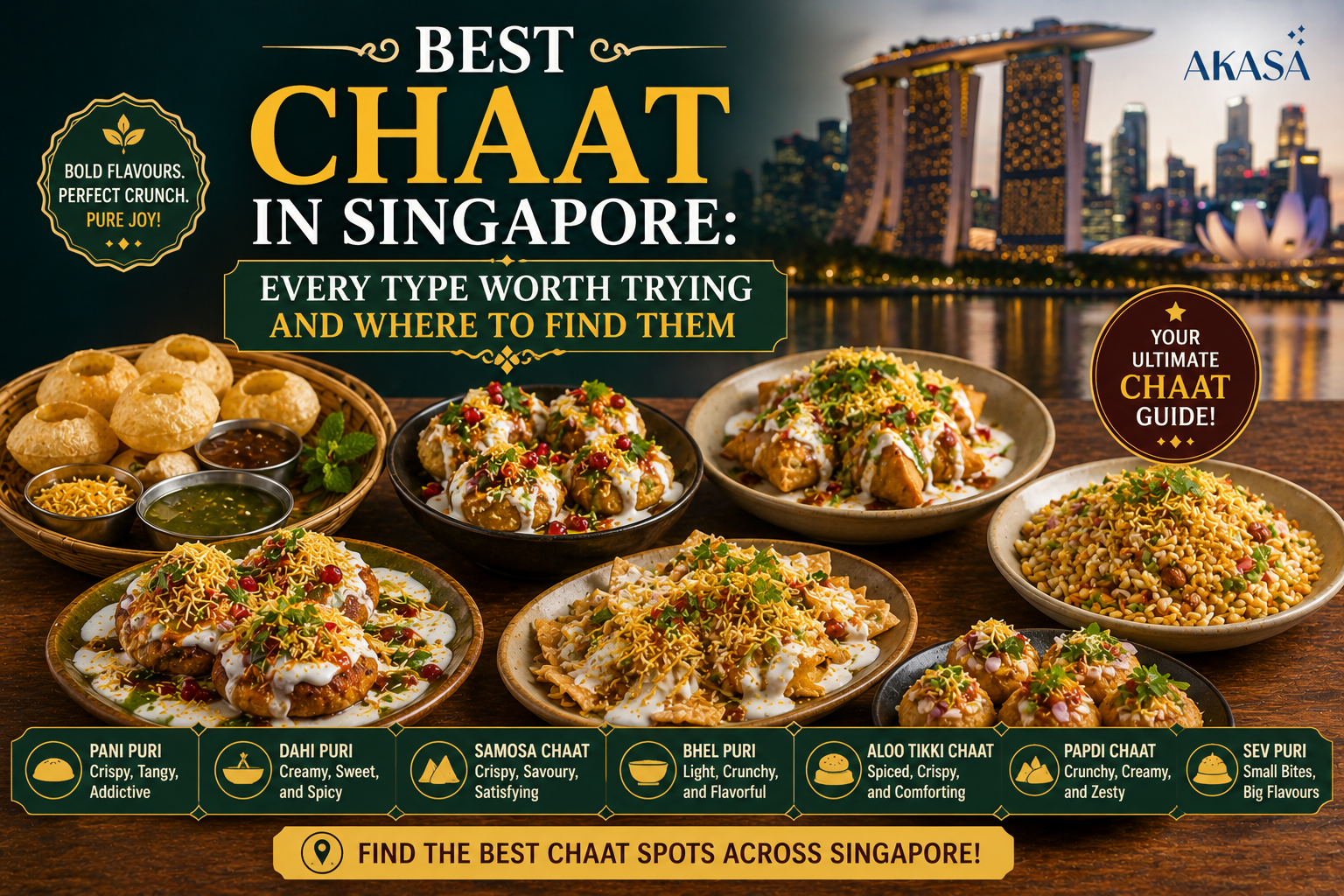
Growing up eating chaat in India, I had one standard: Does it hit all five at once? Sweet, sour, spicy, tangy, and crunchy, all in the same bite. That’s the full point of chaat. It’s not about being subtle. It was not ever meant to be.
For a long time, ruling that kind of chaat in Singapore felt like guesswork. You’d understand about a place, go with some hope, and end up feeding something flat and unremarkable. But over the last few years, things have really improved. A lot. Now you’ll find everything from rapid street-style plates in Little India to well-executed chaat in appropriate restaurants.
The Types of Chaat You Need to Know
Pani Puri
This is the one that converts people. A small, empty, crispy ball you poke a hole in the prime, fill it with spiced potato and chickpeas, then dunk the whole thing in spicy mint-tamarind water before putting it in your mouth totally. You have about two seconds to eat it, or it will crash. That necessity is part of the process. It’s supported one at a time, and a plate usually has six. Eating pani puri is messy and a little chaotic, and that’s accurately how it’s supposed to go.
Papdi Chaat
This one is calmer to eat. Flat, crispy fried discs (papdi) areproperly covered with boiled potato, chickpeas, pure yoghurt, both red and green chutneys, pomegranate grains, and sev. You get everything in one plate, no popping whole things in your mouth, just loading up a disc and feeding it. The contrast between the crunch of the papdi and the cool yoghurt is what makes it more valuable.
Dahi Puri
Alike to pani puri but without the flavored water. The hollow puris are packed with boiled potato, drizzled with pure white yoghurt, tamarind chutney, green chutney, and sev. Chilly and richer than pani puri. Good for people who like the feel of puri but aren’t sure about the messy water dunking.
Sev Puri
Flat papdi base, topped with potato, onion, raw mango, both chutneys, and a generous pile of sev on top. More dry and crunchy compared to the others. Mumbai street vendors load the sev so high it’s structurally impressive. Bite into it and half of it ends up on your shirt — accepted as part of the process.
Samosa Chaat
A whole samosa, smashed open, then drowned in chickpeas, yoghurt, both chutneys, and spices. This one’s heavier and more filling than most chaat. If you want something that works as a proper snack rather than just a couple of bites, samosa chaat is the one to order.
Bhel Puri
Bloated rice mixed with small chopped onion, tomato,bolied potato, raw mango, both green and red chutneys, and sev. Served beautifully in a paper cone if you’re on a street corner, or in a bowl if you’re in a restaurant. Light, airy, crunchy, and good for when you want something that isn’t too heavy.
Dahi Wada
(also Dahi Bhalla) Soft lentil dumplings soaked in water to remove the oil, then served in a generous pool of chilled yoghurt, topped with tamarind chutney, chilli chutney, and spiced powder. This one’s gentler than most chaat no crunch element, just soft and creamy. Great in Singapore’s heat.
Aloo Tikki Chaat
Shallow-fried potato patties placed on a plate and topped with curried chickpeas, fresh white yoghurt, both green and red chutneys, and chaat masala. Crispy outside, very soft inside the texture contrast works differently from the puri-based chaats but it’s just as good.
Why Akasa Is Worth Trying for Chaat
Akasa at 79 Robinson Road, #01-03 Capitasky in Tanjong Pagar, isn’t a chaat-only spot. It’s a full North Indian fine dining restaurant — one of the best Indian restaurants in Singapore that also serves chaat done properly as part of a broader menu of Indian street food and full meals.
The difference is environment and quality. At a hawker-style chaat counter, you’re eating fast and position up or perched on a stool. That’s fun, and there’s nothing wrong with it. But at Akasa, the chaat gets the same care and notice as the rest of the menu the chutneys are freshly made, the components are sourced properly, and it’s assisted in a setting where you can really slow down and eat properly. The Papdi Chaat and the Pani Puri here are the sort of thing you sit with rather than gulp down.
If you’ve never tried Indian chaat in Singapore in a fine dining context, Akasa is where that makes sense for the first time. The restaurant is built around North Indian culinary traditions, and chaat is a central part of that cuisine — not an add-on item. Check out their full menu at the north Indian restaurant in Singapore.
It’s also worth knowing that Akasa has an excellent vegetarian menu alongside everything else. For anyone eating vegetarian, a quality vegetarian restaurant in Singapore that does chaat this well is genuinely hard to find.
Where to Find the Best Chaat in Singapore
Little India is the obvious starting point for anyone looking for the best chaat in Singapore. It’s the neighbourhood with the longest history of Indian food in Singapore, and chaat has been part of that food culture for decades. The atmosphere is right too — eating chaat on the pavement near a busy market actually feels closer to the original Indian street food experience than eating it in a formal dining room.
Kailash Parbat (3 Belilios Road, Hilton Garden Inn) has one of the most extensive chaat menus in the city. They do Pani Puri, Sev Puri, Bhalla Papdi Chaat, Bombay Bhel Puri, Bambaiya Dahi Puri, Papdi Chaat, Aloo Tikki Chaat, and Samosa Chaat — all priced around $8–$10. They also do a KP Chaat Platter ($19) that includes Dahi Wada, Bhel Puri, Sev Puri, and a Crispy Corn Basket on one plate, which is the smart order if you’re going with a group and want to try multiple things. Been around for years, still consistently good, and one of the more known names if you ask locals where to go for chaat in Singapore.
Dwaraka Restaurant in Little India has a street food kiosk set up along the five-foot way of their shophouse. Twelve chaat options, eaten at an outdoor table or taken to go. It’s as close as Singapore gets to the actual street-eating experience — the outdoor setting and the quick service make it feel genuinely casual in a way that indoor restaurants don’t always manage.
House of Samosas is a smaller, more focused option — as the name suggests, the samosa side is their strength, which means Samosa Chaat here is particularly good. Worth knowing if that’s the specific type you’re after.
Chaat and Drinks: A Combination That Works
One thing that doesn’t get mentioned enough is how well chaat pairs with drinks. In India, people eat chaat with masala chai, lassi, or nimbu pani (fresh lime water). That combination spiced, tangy food with something cool and refreshing — is very deliberate.
In Singapore, the fine dining version of that pairing works well at Akasa, which has a proper bar programme alongside the food menu. The spice and tang of papdi chaat or aloo tikki alongside a good cocktail or wine is something worth trying if you haven’t.
Tips for Eating Chaat in Singapore (From Someone Who Has Done It a Lot)
Eat it fresh. Chaat is made to order and served immediately because the crunch disappears once the yoghurt and chutneys sit on the base for more than a few minutes. If there’s ever a wait, it’s worth it. Don’t pack it and eat it an hour later — you’ll just be eating soggy bread.
Start with Pani Puri if you haven’t had it before. It’s the most interactive and the most distinctly different from anything else. Eat it whole, don’t bite into it first.
Order a plate with multiple types if the restaurant offers it. The KP Chaat Platter at Kailash Parbat is a good example — it’s the most efficient way to understand what different types taste like before committing to a full serving of one.
Ask about the spice level if you’re sensitive to heat. Chaat can range from mild (Dahi Wada, Dahi Puri) to properly spicy (anything where you can request extra green chutney). Most good chaat restaurants will adjust if you ask.
Eat it as a starter or snack, not as your main meal. Chaat is filling but it’s not designed to be a full dinner. In India, people eat it between meals. In Singapore, it works well as a starter before a main course, or as an afternoon snack.
Where to Eat Chaat Based on What You're Looking For
Just a quick snack, fast and casual: Dwaraka Restaurant’s outdoor kiosk in Little India Widest chaat variety in one place: Kailash Parbat Samosa Chaat specifically: House of Samosas Mumbai-style, lighter chaat: Makaan Mumbai Proper sit-down experience with full North Indian menu: Akasa, Tanjong Pagar Vegetarian chaat with fine dining context: Akasa
Frequently Asked Questions
Indian street food with a blend of crispy base, chutneys, yoghurt, and flavours that make it sweet, sour, spicy, and tangy all collectively.
Pani Puri is the most desirable as well as generally ordered, followed by Papdi Chaat and Samosa Chaat.
Kailash Parbat and Dwaraka for informal style, Akasa for a more elegant experience.
Absolutely, traditional chaat is completely vegetarian.
It change. Some are mild, others can be totally spicy relying on chutneys.
You can, but it’s generally eaten as a snack or starter.
They are the same, just several names used in different areas.
Thin crispy threads made from chickpea flour, used as an excellent.
Absolutely, but it doesn’t travel well. Superior eaten recent.
Better components, fresh chutneys, and more notice to detail in preparation and show.
Recent Posts
Bulk Diwali Gifts for Companies Singapore: 2026 Corporate Gifting Guide

Diwali Office Gifts Singapore Corporate Teams Will Appreciate

Meaningful Diwali Return Gift Ideas Singapore Guests Will Love
Indian Restaurant for Diwali Party: Top 2026 Singapore Venues

Best Place to Celebrate Diwali: Top Diwali Festival Spots in Singapore
View More Articles
Bulk Diwali Gifts for Companies Singapore: 2026 Corporate Gifting Guide
September 24, 2026
Diwali Office Gifts Singapore Corporate Teams Will Appreciate
September 24, 2026 Meaningful Diwali Return Gift Ideas Singapore Guests Will Love
September 24, 2026 Indian Restaurant for Diwali Party: Top 2026 Singapore Venues
September 24, 2026