
- Restaurants
- May 13, 2026
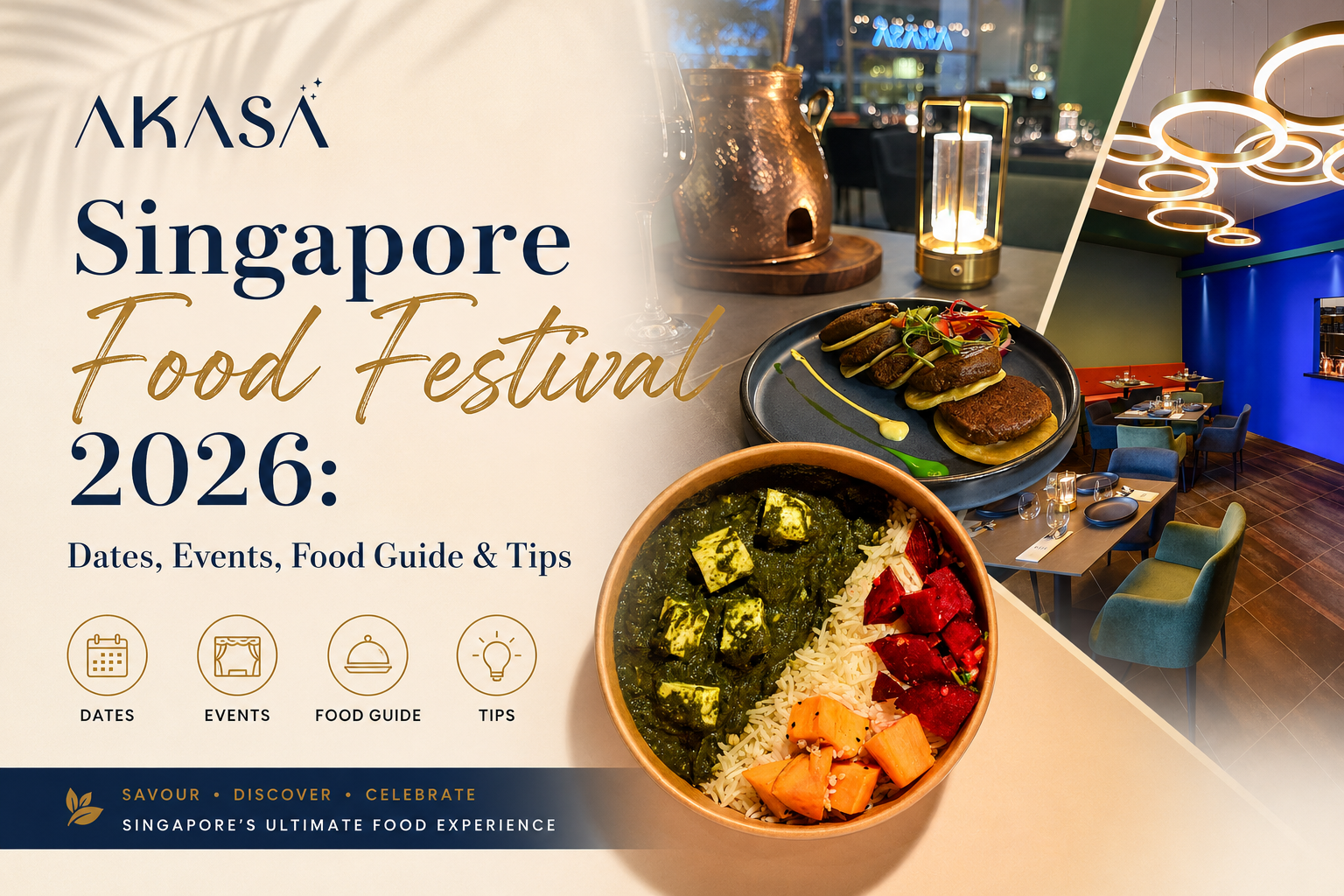
I’ll be honest — the first time someone told me Singapore has an annual food festival, my first thought was “doesn’t Singapore already feel like a year-round food festival?” And they laughed and said yeah, kind of, but September is different.
They were right.
The Singapore Food Festival has been running since 1994. It’s not some new tourism gimmick. Thirty-plus years in, it’s still genuinely good — partly because Singapore’s relationship with food isn’t performative. Food here is tied into identity, into how people greet each other (“have you eaten?”), into everyday life in a way that most cities can’t really replicate.
This guide is for anyone planning to be in Singapore around September 2026, or just trying to understand what SFF actually is before deciding if it’s worth planning around. Real event info, what to eat, how to plan your days, and yes where Akasa fits into your time here.
So What Exactly Is Singapore Food Festival?
Run by the Singapore Tourism Board, SFF is a multi-week, island-wide food event. Not one venue, not one weekend. It stretches across Chinatown, Dempsey Hill, Bayfront, hawker centres in different parts of the city, restaurants in the CBD, and honestly, places you wouldn’t expect.
The 2025 edition — the 32nd — ran from 4 to 24 September under the theme “Have You Eaten Yet?” which is kind of perfect if you know Singapore. That phrase is a greeting here. Not a literal question. More a way of checking in, of caring. So calling the whole festival that felt right.
Singapore Food Festival 2026 — Key Info
When: September 2026 — exact dates TBC. The 2025 edition ran 4–24 September for reference.
Where: City-wide. The main hub in 2025 was Mise en Place @ Dempsey Hill. Satellite events ran in Chinatown, Bayfront, hawker centres across the island, and at 50+ affiliate restaurants.
Who runs it: Singapore Tourism Board
Cost: Depends on the event. Some things are free. Chef dinners, signature events, and unique experiences are ticketed — prices vary a lot. The free-to-attend parts are actually pretty good, so don’t assume you need to spend big to enjoy it.
What Type of Events Are There?
This is where people get confused. SFF isn’t a single event you turn up to. It’s a programme. Think of it like a mini film festival — there’s a schedule, different events at different venues, and you pick what you want to attend.
Signature Events are the headline experiences. In 2025 these included The Long Table and Food is Art. Big concepts, iconic venues, limited seats. These are the ones that sell out first — sometimes within hours. If you’re going to book anything in advance, start here.
Pop-Up Events are more casual. The 2025 edition had roving Food Truck City Tours moving through different parts of Singapore over the festival period. You can walk in, try things, move on. Good if you don’t want to commit to a full evening somewhere.
Unique Events are honestly my favourite category. They tend to be the strangest and the most memorable. The Hawker Wine Safari — pairing hawker food with wine, which sounds wrong until you try it — is one example. Kueh Appreciation Day is another, where Singapore’s traditional bite-sized snacks get a proper spotlight. These are the ones people remember six months later.
Affiliate Restaurant Events are SFF-exclusive menus and experiences at participating restaurants across Singapore. So even if you’re busy most of the festival, you can still eat your way through it by choosing an affiliate restaurant for dinner a few nights. In 2025 there were over 50 of them.
What to Actually Eat
Start With the Classics
If you’re new to Singapore food or just want to make sure you eat the right things during SFF, here’s the honest short list.
Hainanese Chicken Rice — Poached chicken, fragrant rice, chili sauce, ginger paste. Sounds like nothing. A good plate of this from a hawker stall that’s been doing it for 30 years tastes like something you’ll try to recreate at home and fail. Singapore’s de facto national dish.
Chilli Crab — Crab in a thick tomato-egg gravy with heat. Rich, saucy, you’ll need a lot of bread to mop it up. Messy in the best way. Don’t wear white.
Laksa — Coconut broth, noodles, prawns, fish cake. Spicy, rich, deeply satisfying. If you eat this at a good hawker stall on a warm September night, you’ll understand why people move to Singapore.
Satay — Skewered grilled meat, peanut sauce. The charcoal smell when you walk past a satay stall at night is something. Order more than you think you need.
Char Kway Teow — Wok-fried flat noodles with dark soy, eggs, prawns, Chinese sausage, a bit of lard. Fast to eat. Hard to stop thinking about afterwards.
The Underrated Stuff
Kueh — Traditional Peranakan and Malay snacks, steamed or fried. Usually made with rice flour and coconut. They’re not flashy. They’re really good. Kueh Appreciation Day during SFF exists because these things don’t get enough credit outside of heritage communities.
Rojak — Mixed fruit and vegetable salad with prawn paste dressing. Pungent, sweet, tangy, a bit funky. One of those things you’re not sure about on the first bite and then suddenly you’ve finished the whole plate.
Bak Kut Teh — Pork rib soup. The Singapore version is peppery. The Malaysian version is more herbal. Both are good. Eat this for breakfast if you get the chance — that’s how locals do it.
Mod-Sin — Modern Singapore Cuisine
Younger Singapore chefs have been pushing local flavours into contemporary formats for years now. You’ll see this at SFF in the chef collaboration events — laksa as a pasta, rendang as a tasting menu course, kueh reimagined as plated desserts. When it works, it’s genuinely interesting. When it doesn’t, it feels like food trying to be clever.
The festival tends to curate the better end of this. Worth trying at least one Mod-Sin experience if you can get tickets.
How to Plan Your Days
If you’ve got one day: Don’t try to do everything. Pick the Festival Village as your starting point, arrive mid-morning before the lunch crowd hits, eat a few things, check the schedule for afternoon events. In the evening, head somewhere like Chinatown where the satellite events tend to be good, eat more, walk around.
Two days: Day one is the festival hub and hawker showcases. Book one Unique Event or Signature Event for day two’s evening and spend the morning on a food trail through a heritage neighbourhood. Little India or Kampong Glam both have their own food cultures worth spending time in.
Three days or more: Relax. Add an affiliate restaurant dinner, maybe a cooking class if they’re offered that year. Use extra time to eat at Singapore’s regular hawker centres away from the festival. Maxwell Food Centre, Lau Pa Sat, Old Airport Road — these aren’t SFF events but they’re worth going to while you’re here.
Budget Guide
You don’t have to spend much. Hawker food during the festival runs $4 to $12 per dish. Many pop-up events are free. You can have a really satisfying day for $30 or less if you stick to the street food side of things.
Mid-range — casual ticketed events, food trails, a sit-down lunch — budget maybe $50 to $80 per person per day.
For the chef collaboration dinners and signature events, $100 to $250+ per person is normal. These are worth it for the experience, not just the food. But only book them if that’s genuinely how you want to spend your evening.
Tickets — How and When to Book
Everything goes through the official SFF website. The schedule usually drops a few weeks before the festival opens. When it does, move fast. Signature events and Unique Events sell out within hours sometimes. Set a reminder.
Free events don’t need booking but some use timed entry. Check the schedule before assuming you can walk up at any time.
Getting Around
For Bayfront Event Space: MRT to Bayfront station, Downtown Line or Circle Line. Walk out and you’re basically there.
For Dempsey Hill: no MRT. Take a Grab or taxi — it’s about 10 minutes from Orchard.
For Chinatown: Chinatown MRT on the North East Line.
Go before 12pm or after 2pm to avoid the lunch crush. And go slightly before 6:30pm if you want dinner without queuing for ages.
Wear light clothes. September in Singapore is warm and humid. Comfortable shoes — you’ll walk more than you expect.
Where to Eat Between Festival Events — Akasa
The pop-ups and hawker showcases are excellent, but if you want a proper sit-down dinner one evening — something with a real kitchen, a full menu, and the kind of service that makes an evening feel like an occasion — Akasa is worth knowing about.
Akasa is at 79 Robinson Road, #01-03 Capitasky, a short walk from the CBD. It’s a proper Indian restaurant in Singapore — North Indian fine dining built on recipes from royal Indian kitchen traditions. Not a buffet, not a curry house. A real restaurant that takes the food seriously.
The dal makhani has that slow-cooked depth you only get when someone actually left it on the flame overnight. The butter chicken is smoky from the tandoor, not sweet. The lamb rogan josh is rich and bold and the kind of dish you order again before you’ve finished the plate.
It connects to what SFF is about in a way that makes sense — heritage food, done with craft, without trying to be something it’s not.
If you don’t eat meat, Akasa’s vegetarian menu covers everything from starters to dessert. Not a side section — a full offering. Works well for mixed groups too.
Their weekday set lunch is genuinely good value for the CBD. Multi-course, proper food, none of the dinner-hour pricing. And if you’re in Singapore with a team or for work, their business lunch setup handles group bookings well.
Address: 79 Robinson Road, #01-03 Capitasky, Singapore Phone / WhatsApp: +65 8012 1181 Book: akasa.sg — reserve ahead, especially in September when the city is busy
Other Food Events in Singapore Worth Knowing About
GastroBeats — ran 5 to 28 June 2026 at Bayfront Event Space. Street food market mixed with live music and DJ sets. Relaxed vibe, good variety. Past lineups included Warabimochi Kamakura, Papi’s Tacos, NOSH.
Singapore Food Expo — 29 May to 1 June 2026, Singapore EXPO Hall 5. Free entry. Asia’s longest-running food show. Hundreds of brands, live demos, lots of sampling. Good if you like discovering products.
World FoodFest — 30 April to 3 May 2026 at Singapore EXPO. International food brands, consumer-facing marketplace. More of a shopping and discovery event than a cultural one.
None of these are the same as SFF. They’re about eating and discovering. SFF is more about understanding — Singapore’s food identity, where these dishes came from, why they matter. That’s the difference.
Singapore Food Festival isn’t overhyped. It’s one of the better food events in Southeast Asia, and it works because Singapore’s food culture is the real thing — not manufactured for tourists, not cleaned up for Instagram. Hawker food that’s been done the same way for decades. Heritage dishes that carry actual history. Chefs who care.
If you’re going to be in Singapore in September, plan around it. Book the events you want early. Eat your way through the rest of it without a schedule. And somewhere in between the hawker stalls and the chef dinners, find a night to sit down properly at somewhere like Akasa — because that kind of meal rounds a food trip out in a way that a pop-up stall, as good as it is, can’t quite do.
Akasa reservations: akasa.sg Call or WhatsApp: +65 8012 1181 Find us at: 79 Robinson Road, #01-03 Capitasky, Singapore
Frequently Asked Questions
Not officially confirmed yet. The 2025 edition ran 4–24 September 2025, so September 2026 is the expected window. Check visitsingapore.com or singaporefoodfestival.com for the official announcement when it drops.
All over Singapore. In 2025, the central hub was at Mise en Place @ Dempsey Hill. Events also ran in Chinatown, Bayfront, and at affiliate restaurants across the city. There’s no single venue.
Some of it is free. General festival spaces and pop-up events usually are. Chef dinners, signature events, and unique experiences are ticketed with varying prices. You can have a good time without spending much — or spend more for the premium experiences. Up to you.
Hawker classics — chicken rice, chilli crab, laksa, satay, char kway teow. Heritage snacks like kueh and rojak. Modern Mod-Sin cooking from Singapore’s chef scene. And affiliate restaurant menus across different cuisines.
Yes. It gives you access to things you can’t do on a regular trip — chef collaborations, heritage food trails, one-night-only events. The food is familiar in some ways and surprising in others. Worth going even if you know Singapore well.
Immediately when the schedule comes out. The limited-seat events go fast. Don’t assume you can book a week later.
If it’s at Bayfront: MRT to Bayfront station, two-minute walk. If it’s at Dempsey: take a Grab, there’s no direct MRT. Both are easy, just different.
Yes — Singapore’s food culture has a strong vegetarian side, especially in Indian and Chinese hawker food. You’ll find plenty at the festival. For a full vegetarian fine dining experience while in Singapore, Akasa’s vegetarian menu is worth considering.
Light clothes. Singapore is warm and sticky in September. Outdoor venues have no aircon. Wear something breathable, bring comfortable shoes, and carry a small bag. That’s really it.
Daytime events, pop-ups, and hawker showcases are all fine for kids. Evening wine pairing events and ticketed dinners tend to be adults-only or adult-oriented. The daytime stuff is genuinely good for families.
Recent Posts
Bulk Diwali Gifts for Companies Singapore: 2026 Corporate Gifting Guide
Diwali Office Gifts Singapore Corporate Teams Will Appreciate

Meaningful Diwali Return Gift Ideas Singapore Guests Will Love
Indian Restaurant for Diwali Party: Top 2026 Singapore Venues
Best Place to Celebrate Diwali: Top Diwali Festival Spots in Singapore
View More Articles
Bulk Diwali Gifts for Companies Singapore: 2026 Corporate Gifting Guide
September 24, 2026
Diwali Office Gifts Singapore Corporate Teams Will Appreciate
September 24, 2026 Meaningful Diwali Return Gift Ideas Singapore Guests Will Love
September 24, 2026 Indian Restaurant for Diwali Party: Top 2026 Singapore Venues
September 24, 2026