
- Restaurants
- Updated June 30, 2026
Little India Singapore: A First-Timer's Guide to the Neighbourhood
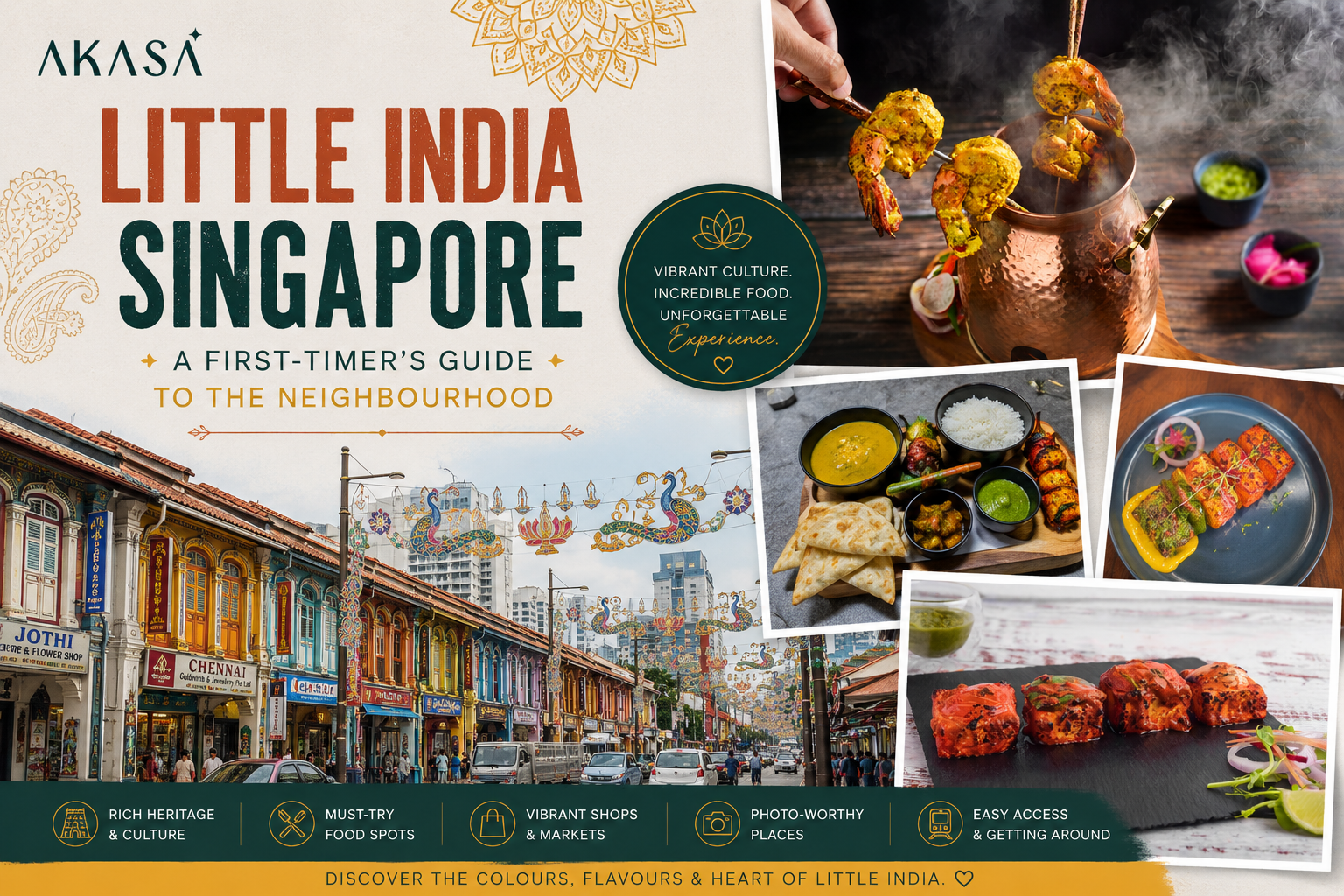
TL;DR: Walk it, don’t tour it. Start near Tekka Centre, head down Serangoon Road, and see where it takes you. Two hours if you’re quick, half a day if you actually stop to eat. Skip the car — take the MRT to Little India station and save yourself the parking hunt. Deepavali season is a different animal entirely, so budget extra time then.
Why Little India Singapore Deserves More Than a Quick Stop
Here’s the thing about Little India. Most people do it wrong. They get off at the MRT, walk to whichever temple shows up first on Google, take a photo, leave. Twenty minutes, tops. Better than skipping it, sure. But it’s not really Little India. It’s the Wikipedia version of Little India.
The actual neighbourhood is messier than that. Walk down Serangoon Road on a weekday afternoon and you’ll catch jasmine garlands drying in the sun outside one shop, frying dosa batter two doors down, an incense stick burning right at the entrance of a sari shop where the owner’s mid-argument with a supplier on the phone — in Tamil, switching to English the second a tourist wanders in asking for directions. Nobody’s performing for anyone. That’s just a Tuesday there.
There’s a temple here older than most buildings in Singapore, sitting a five-minute walk from a department store that’s open at 3am. Nobody finds that strange. We kind of love that about the place, honestly.
This guide isn’t trying to cover everything. It covers what’s worth your actual time — temples, food, shopping, getting there, when to go — and skips the attractions that exist mostly so other blog posts have something to list.
Getting to Little India Singapore
Take the MRT. That’s really the whole tip. Little India station sits on the North East and Downtown lines and drops you right on Serangoon Road. Want to ease in from the quieter end instead? Get off at Farrer Park and walk toward the noise.
Don’t drive in. There’s parking near Tekka and Mustafa, technically, but weekends turn it into a small headache, and the lanes are tight enough that you’ll spend longer circling than you would just eating lunch somewhere else first. From the CBD, grab a cab. Fifteen minutes, no parking stress, done.
What to See in Little India Singapore
Start with the temples, even if you’re not the temple-going type. Sri Veeramakaliamman is the one that ends up on every camera roll — tower stacked with carved deities, every colour going at once. Morning or late afternoon works best; midday sun just flattens the whole thing into a flat photo. A short walk over, Sri Srinivasa Perumal is quieter. Smaller crowd, same level of detail once you actually look up at the gopuram.
Want more than the photo-op version? Spend an hour at the Indian Heritage Centre on Campbell Lane. Small museum. Doesn’t try to be everything. It traces, properly, how the Indian community here actually came together, which beats the plaque-and-statue version you get walking past on the street. Free for residents, a few dollars for everyone else.
There’s also genuinely good street art tucked into the back lanes — Belilios Road, Clive Street — and most of it isn’t there for Instagram. Murals about old trades, old neighbourhood figures, stuff that means something locally even if you don’t catch the reference. Walk it yourself, or follow the Little India Heritage Trail, free and self-guided, looping past most of the temples and shophouses worth seeing.
Where to Shop in Little India Singapore
Tekka Centre first, always. Downstairs: a proper wet market, fish and vegetables and spices sold by weight, not packaged for tourists. Upstairs: sari shops and tailors, more of them than you’d expect packed into one building. Loud. A bit much, honestly. That’s the whole charm of it.
Then Mustafa, the one that never closes. Even if shopping isn’t really your thing, walk through the grocery floor — the spice selection alone makes the trip worth it — and check the gold counters, which tend to undercut what you’d pay elsewhere in the city. Little India Arcade, just across the road, is smaller and far less overwhelming, good for henna, bangles, and Indian sweets you’ll end up eating before you’ve even left the building.
Serangoon Road itself is basically one long stretch of jewellery shops, 18k and 22k gold, mostly traditional designs with a few modern pieces mixed in. Buffalo Road, just behind Tekka, has the vegetables and spices your regular Singapore supermarket has simply never stocked.
Where to Eat in Little India Singapore
Most guides treat this part like an afterthought. We don’t get that. The food’s the whole reason half the people we know keep coming back to this neighbourhood in the first place. Tekka’s hawker stalls do biryani properly, plus the South Indian breakfast classics — dosa, idli — at prices that make a CBD lunch set look ridiculous. A few streets further out, proper North Indian kitchens turn out tandoori, curries with real depth, naan that’s actually hot off the tawa rather than reheated under a lamp.
If a hawker tray isn’t really what you’re after, Akasa does North Indian food with a bit more polish. Sharing plates, a genuinely large vegetarian menu, none of the elbow-to-elbow rush you get at the busier counters nearby. Works fine for a solo lunch. Works just as well for a longer evening when you actually want to sit and talk to whoever you’re with.
Little India Singapore by Day vs. Night
Day belongs to the temples and the market — better light, fewer people before noon, easier photos. Night is a different mood entirely. Mustafa stays just as busy regardless of the hour, restaurants fill in, street vendors selling garlands and snacks come out properly. If you’ve only got time for one visit, make it evening. It’s closer to how the people who actually live and work there experience the place, not the daytime version most tourists get.
Best Time to Visit
Any time of year works fine, honestly. But festival season changes the whole equation. Deepavali, October or November depending on the year, turns Serangoon Road into a corridor of lights for weeks before the actual date, and weekend crowds get genuinely intense. Pongal in mid-January and Thaipusam not long after bring their own version of the same thing. Want the spectacle? Go during a festival. Want to actually walk without bumping shoulders every ten steps? Skip Sunday afternoons, and skip the two weeks leading into Deepavali altogether.
A Simple Half-Day Plan
Start at Little India MRT, head straight to Sri Veeramakaliamman while it’s still quiet. Cross over to Tekka for a market wander and something quick to eat. Half an hour at the Indian Heritage Centre if museums are your thing, skip it if they’re not, nobody’s grading you on this. Work down Serangoon Road toward the jewellery shops and the Arcade after that. Then sit down for a proper meal instead of grabbing something on the move. You’ll have walked enough by then to actually want to sit.
Tips for First-Time Visitors
- Cover shoulders and knees before going into any temple. Shoes off at the door, no exceptions.
- Bring small cash notes. Plenty of the smaller stalls still don’t take cards.
- Sundays are the busiest, full stop. Weekday mornings give you actual room to look around.
- Haggling works at the small jewellery and souvenir stalls. Don’t try it at Mustafa or Tekka — fixed prices, no movement.
Little India isn’t a twenty-minute stop on the way to somewhere else, not really. Give it a proper afternoon and it turns into one of the more interesting pockets of the city — loud, a little messy, and a long way from the polished, air-conditioned version of Singapore most people see first. If a street snack hasn’t filled you up by the time you’re done wandering, Akasa’s the Indian restaurant Singapore regulars keep returning to, with a North Indian restaurant in Singapore menu and a full Indian vegetarian restaurant in Singapore range if meat’s off the table for you.
Want more detail than this overview gives you? Our pieces on things to do in Little India and the restaurants in Little India go further into spots we didn’t have room for here.
Frequently Asked Questions
Yes, easily. It doesn’t look or feel like anywhere else in Singapore.
Two hours minimum. Half a day if you want to actually eat and shop without rushing through it.
It is. Well-lit, busy, shops open late, especially around Mustafa.
MRT, no question. Little India or Farrer Park station, both a short walk from the main streets.
Yes. Shoulders and knees covered, shoes off at the door.
Whenever works, really, but Deepavali season is when the district properly lights up.
Loads. North and South Indian vegetarian food is everywhere here, hawker stalls to sit-down restaurants.
Yes, properly 24 hours, not “24 hours” with an asterisk. Good for late-night shopping.
At the small stalls, sure. Not at Mustafa or Tekka — those prices don’t move.
Biryani or a South Indian breakfast at Tekka. Save the sit-down North Indian meal for later.
Recent Posts
Bulk Diwali Gifts for Companies Singapore: 2026 Corporate Gifting Guide
Diwali Office Gifts Singapore Corporate Teams Will Appreciate

Meaningful Diwali Return Gift Ideas Singapore Guests Will Love
Indian Restaurant for Diwali Party: Top 2026 Singapore Venues
Best Place to Celebrate Diwali: Top Diwali Festival Spots in Singapore
View More Articles
Bulk Diwali Gifts for Companies Singapore: 2026 Corporate Gifting Guide
September 24, 2026
Diwali Office Gifts Singapore Corporate Teams Will Appreciate
September 24, 2026 Meaningful Diwali Return Gift Ideas Singapore Guests Will Love
September 24, 2026 Indian Restaurant for Diwali Party: Top 2026 Singapore Venues
September 24, 2026