
- Restaurants
- Updated July 2, 2026
Team Building Activities Singapore: What Actually Works in 2026
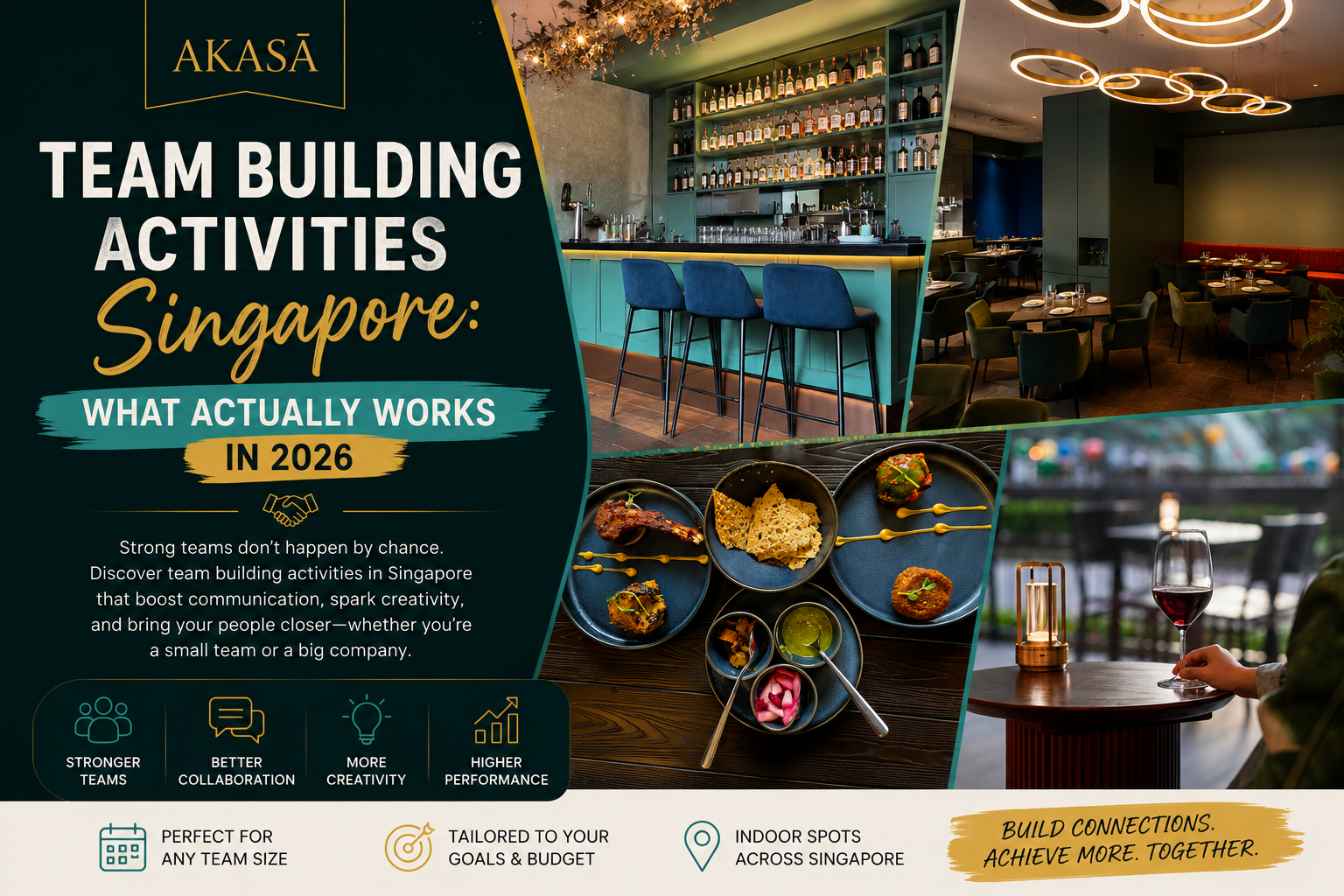
TLDR: Most Team Building Activities Singapore fail because they’re planned wrong, not because the concept is bad. Singapore has genuinely solid options — cooking sessions, escape rooms, outdoor races, cultural dinners. Pick the one that fits your real goal, not just what looks good in an email to HR.
Nobody Actually Likes Bad Team Building
Say “team building” to most employees and watch the face. You’ll see it — that slight grimace. That polite nod. The silent prayer that it’s short.
That reaction isn’t about team building as a concept. It’s about the bad version. The one where everyone stands in a circle for icebreakers that should’ve ended twenty minutes ago. Or the company-wide event that genuinely could have been a lunch.
Good team building doesn’t announce itself. People leave feeling like they had a good time, and somewhere in the middle of all that, they found out something real about the person who sits three desks away.
Singapore has both kinds. This is a guide to the good kind.
One Question Before You Book Anything
What do you actually want people to feel at the end of the day?
Not “improve communication.” Not “boost morale.” Those are goals on a slide deck. Think more honestly — do you want your team to laugh together? Work through a real problem? Help the new hires feel less like strangers? Just decompress after a rough few months?
That answer removes half the options straight away. A competitive outdoor race is not decompression. Art jamming is not a communication exercise. A cooking class can quietly be both — depending on how you set it up.
That one filter alone saves a lot of money on team building activities Singapore companies regret.
The Best Team Building Activities Singapore
Cooking Classes and Culinary Challenges
Honest take — this format works better than almost anything else for most corporate groups. Not because it’s the most impressive on paper. Because it works on people who didn’t want to be there.
Someone who would never do a trust fall will absolutely roll up their sleeves when there’s food involved. There’s something about a kitchen that strips away office behaviour. You can’t stay in serious-manager mode when you’ve just burned the onions in front of everyone.
The structure is simple. Teams get ingredients, a dish to make, a time limit. Someone chops, someone runs the stove, someone reads the recipe and gets half-ignored anyway. The dynamic that plays out in those forty-five minutes is a pretty honest picture of how the team actually works.
In Singapore, this format has an added layer. The cuisine variety here is real — Peranakan cooking, North Indian dishes, local hawker staples. There’s genuine cultural learning built into it, not bolted on as a talking point.
At Akasa, we’ve hosted corporate groups who were tired of the standard team bonding dinner Singapore approach — private room at a hotel, set menu, awkward silences. They wanted the dinner to actually mean something. We work with groups who want to cook, learn about Indian cuisine, and eat what they made. It becomes a real conversation starter, not just a meal.
If that sounds like what your team needs, we’re an Indian restaurant Singapore with proper space and real culinary experiences for groups. Come cook, or just come eat well. Both are fine.
Takes 2 to 3 hours. Works for 10 to 60 pax. Ends with an actual meal. That’s a good day.
Amazing Race Singapore
This one’s earned its place. Teams split up, navigate the city through clues, complete challenges at checkpoints, race to finish.
What makes it work as a corporate team outing idea is the natural role split. Who navigates? Who does the physical stuff? Who handles talking to strangers? Different people step up for different things. That’s the actual bonding — not the race itself, but who shows up where.
The better providers now run everything through WhatsApp bots, so clues arrive in real time without a facilitator trailing every group. Popular routes run through Chinatown, HarbourFront, Gardens by the Bay, Sentosa. Location changes the whole feel.
Good for 50 to 300 pax. Budget SGD $28 to $60 per person depending on provider and length.
Escape Rooms
Six to twelve people. One room. Sixty minutes on the clock.
What escape rooms reveal that normal work settings don’t: who actually communicates under pressure, who steps back when they’re stuck, who solves one puzzle and checks out for the rest. In a regular office you can coast invisibly. Not in here.
The quality gap across Singapore venues is real. The good ones build puzzles that require multiple people working in parallel. The bad ones have a single puzzle that one person solves while everyone else stands nearby looking supportive. Ask the venue directly before booking — does the room require simultaneous teamwork?
Good for team bonding activities for small groups. Budget SGD $25 to $50 per person.
Art Jamming
No competition. No time pressure. No objective.
Canvases, paint, two hours. Some groups do individual pieces. Some go for one massive shared canvas. Some spend half the time deciding and the rest actually painting. All of that is fine.
Art jamming is for teams that are already stretched — too many deliverables, too many meetings, and what they actually need is to exist somewhere without an agenda for a while.
The physical thing they make also matters more than it sounds. People remember events where they created something. That painting sitting on someone’s desk six months later is a better memory anchor than a catered lunch.
Budget SGD $45 to $80 per person.
Terrarium Workshops
Underrated, consistently. Teams build small glass gardens — soil, stones, moss, plants. Thirty to forty-five minutes per person.
It’s tactile and calm. It creates that side-by-side kind of conversation where people aren’t performing — they’re just doing something with their hands and talking. Quieter team members tend to come out in terrarium workshops in ways they don’t during group games or competitions.
Works across age groups easily. Nobody feels physically unfit or out of place. Also runs well as virtual team building Singapore — kits ship to remote participants, session runs on video. Not quite the same as in person, but genuinely workable.
Laser Tag and Archery Tag
Loud. Competitive. Physically tiring. Genuinely fun.
Better for teams that already know each other and just want to let go of some steam. Probably not the best first event for a newly formed group — a lot of visible pressure when you’re still trying to make an impression on people you’ve just met.
Both formats are indoors, which matters more than you’d think in Singapore. Outdoor activities between 11am and 4pm are just uncomfortable. Climate-controlled venues solve that. Group sizes from 20 to 200 work without issues.
CSR Team Building Activities
Assembling care packages. A park cleanup. Volunteering a morning with a local charity.
These work because the shared purpose is actual. Not manufactured. Nobody has to pretend the activity means something — it clearly does.
Employees who are cynical about fun team building activities Singapore-style tend to respond differently to CSR. There’s nothing to roll your eyes at when you’re doing something useful for real people.
Budget varies. Some programmes cost almost nothing. Others with facilitation and materials run SGD $60 to $100 per person.
Bubble Soccer
Not everything needs a deeper purpose.
Giant inflatable bubbles, a football pitch, total chaos. People fall over constantly. No dignity survives the first five minutes. That’s the whole point.
Use this for end-of-year celebrations, casual Fridays, or any occasion where the only actual goal is for people to look completely ridiculous together. It works every time.
Virtual Team Building Activities
Worth including because plenty of Singapore teams run hybrid. Some people in office, some working remotely, some overseas.
Online escape rooms are the most reliable format for this — they actually need synchronous problem-solving, which is what separates team bonding activities from just shared entertainment. Quiz nights are fine, but they’re more passive.
Keep virtual sessions under 90 minutes. People lose real engagement past that point on a screen, and there’s no polite way to hide it.
Matching the Team Building Activities to Your Team
By group size
10 to 30 pax: Cooking class, escape rooms, art jamming, terrarium, cultural dining. 30 to 100 pax: Amazing Race, cooking competitions, multi-station days, laser tag. 100 pax and up: Large-scale Amazing Race, activity carnivals, full field days.
By what you actually need
Better communication: Cooking class, escape room, Amazing Race. Team needs to decompress: Art jamming, terrarium workshop, a relaxed dinner. Just want real fun: Bubble soccer, laser tag, archery tag. Hybrid or remote setup: Virtual escape rooms, online cooking workshops.
By budget
Under SGD $50 per person: Terrarium, basic art jamming, simple escape rooms. SGD $50 to $100: Amazing Race, better escape rooms, cooking class with a full meal. SGD $100 and above: Premium dining, full-day events, customised group experiences.
Venues That Are Worth Knowing
Chinatown: Best for food-based experiences and Amazing Race formats. Dense, walkable, lots of cultural texture.
Sentosa: Better for outdoor and water activities. More logistics involved, but the setting earns it.
Gardens by the Bay: Good outdoor backdrop for scavenger hunts and nature-themed activities.
Bugis / Tanjong Pagar / Orchard: Most indoor workshop studios are clustered here. Easy on the MRT.
For corporate team bonding lunch Singapore or a private group dinner that’s more interesting than a hotel function room, Akasa is centrally located and handles group bookings with full event support. We’ve written about what a food-led team experience actually looks like over at team-building-activities-singapore if you want more context.
Mistakes That Keep Coming Up
Not collecting dietary requirements early enough. Every food event has someone who can’t eat half the menu. Ask before confirming. It takes one short form and saves a lot of stress on the day.
Packing in too much. A five-hour itinerary sounds thorough. Most groups are mentally done after three. Leave real gaps — not just ten-minute transitions.
Booking based on your own taste. You’re not your team. The activity that sounds great to you might land flat with a group that skews older, more introverted, or just different from you. A quick survey before deciding costs nothing.
Outdoor events in the middle of the day. Singapore sun from 11am to 4pm is genuinely harsh. Schedule outdoor portions for late afternoon. Or just pick a covered venue and stop fighting the weather.
Last Word
There’s no single right answer. The best team building activities Singapore has to offer depend on your group size, your real goal, and your budget. What works across all of them: shared effort, different people pulling in different directions, and something worth talking about after.
If food and a genuine experience sounds like the right direction, Akasa runs private dining and culinary events for corporate groups in Singapore. Get in touch at akasa.sg and we’ll put something together that actually fits.
Frequently Asked Questions
Most run SGD $40 to $100 per person. Premium dining or full-day programmes push SGD $150 to $200+.
Cooking class or escape room. Both actually require everyone to contribute rather than letting people disappear into the background.
Loads — art jamming, terrarium workshops, escape rooms, cooking classes, leather crafting. Indoor is usually the smarter default in Singapore anyway.
Yes. Virtual escape rooms and online cooking workshops with pre-shipped kits are functional for mixed setups.
Two to three weeks minimum for small groups. Four to six weeks for 50 pax and above. Friday slots at popular venues go fast.
Shared effort where different people contribute differently. Entertainment without participation doesn’t build much. Working toward something together does.
It can be, if it’s structured with some intention. A random restaurant booking is just a meal. A guided culinary experience or a cooking class that ends with eating together is a proper event.
Clear pricing, real experience with corporate groups, and someone who responds quickly during the planning phase. Slow communication before the event almost always means problems on the day.
Yes — the right one, with private dining and event capabilities. Some build the whole experience around food, which honestly works better than many purpose-built venues.
Something low-pressure and hands-on. Terrarium workshop, art jamming, or a relaxed culinary experience. High-intensity competitive formats work better once the group already has some rapport.
Recent Posts
Bulk Diwali Gifts for Companies Singapore: 2026 Corporate Gifting Guide
Diwali Office Gifts Singapore Corporate Teams Will Appreciate

Meaningful Diwali Return Gift Ideas Singapore Guests Will Love
Indian Restaurant for Diwali Party: Top 2026 Singapore Venues
Best Place to Celebrate Diwali: Top Diwali Festival Spots in Singapore
View More Articles
Bulk Diwali Gifts for Companies Singapore: 2026 Corporate Gifting Guide
September 24, 2026
Diwali Office Gifts Singapore Corporate Teams Will Appreciate
September 24, 2026 Meaningful Diwali Return Gift Ideas Singapore Guests Will Love
September 24, 2026 Indian Restaurant for Diwali Party: Top 2026 Singapore Venues
September 24, 2026